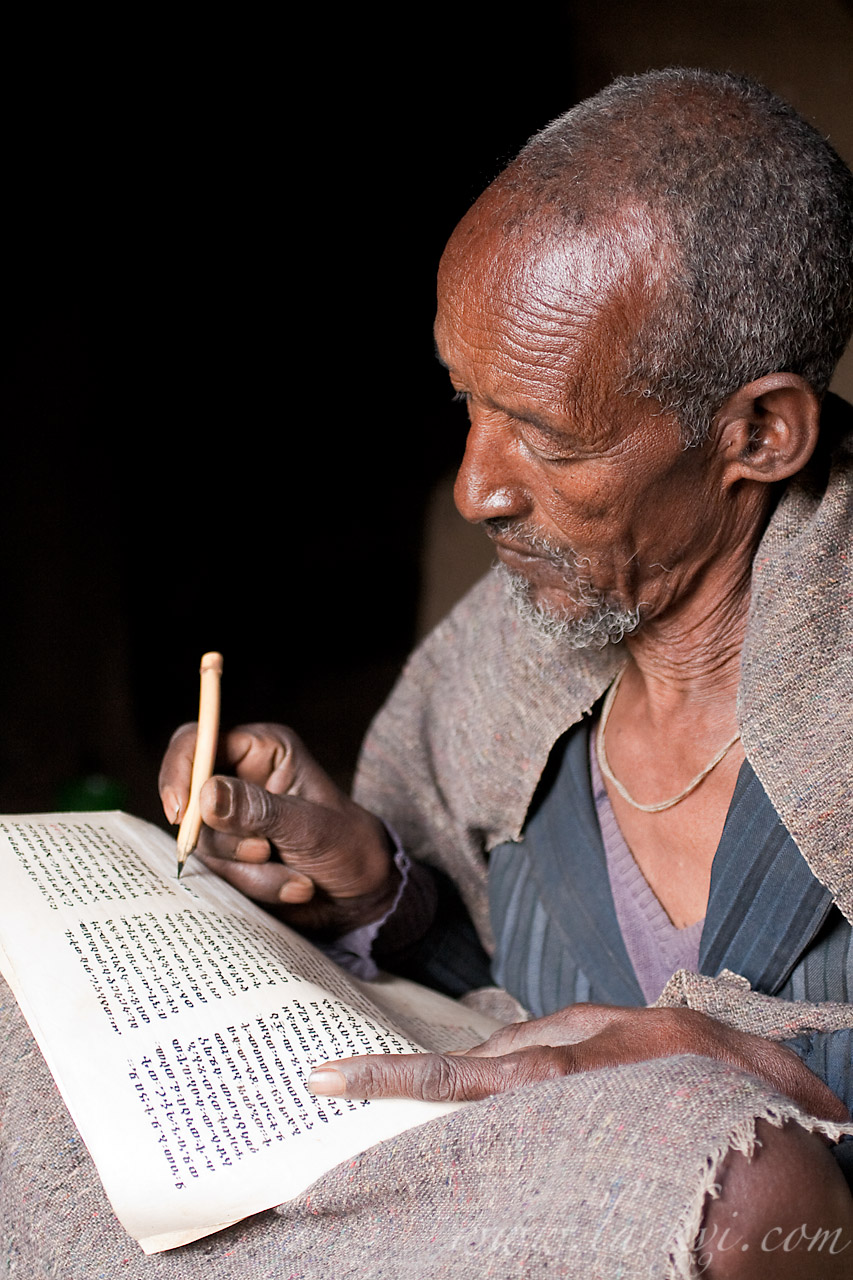
Kes (Priest) Fente is one of numerous scribes in the village of Gälawdios, famous for its scribal tradition. Here he is adding his name to a spare bifolium which I am taking as a sample of his work.

Kes (Priest) Fente is one of numerous scribes in the village of Gälawdios, famous for its scribal tradition. Here he is adding his name to a spare bifolium which I am taking as a sample of his work.
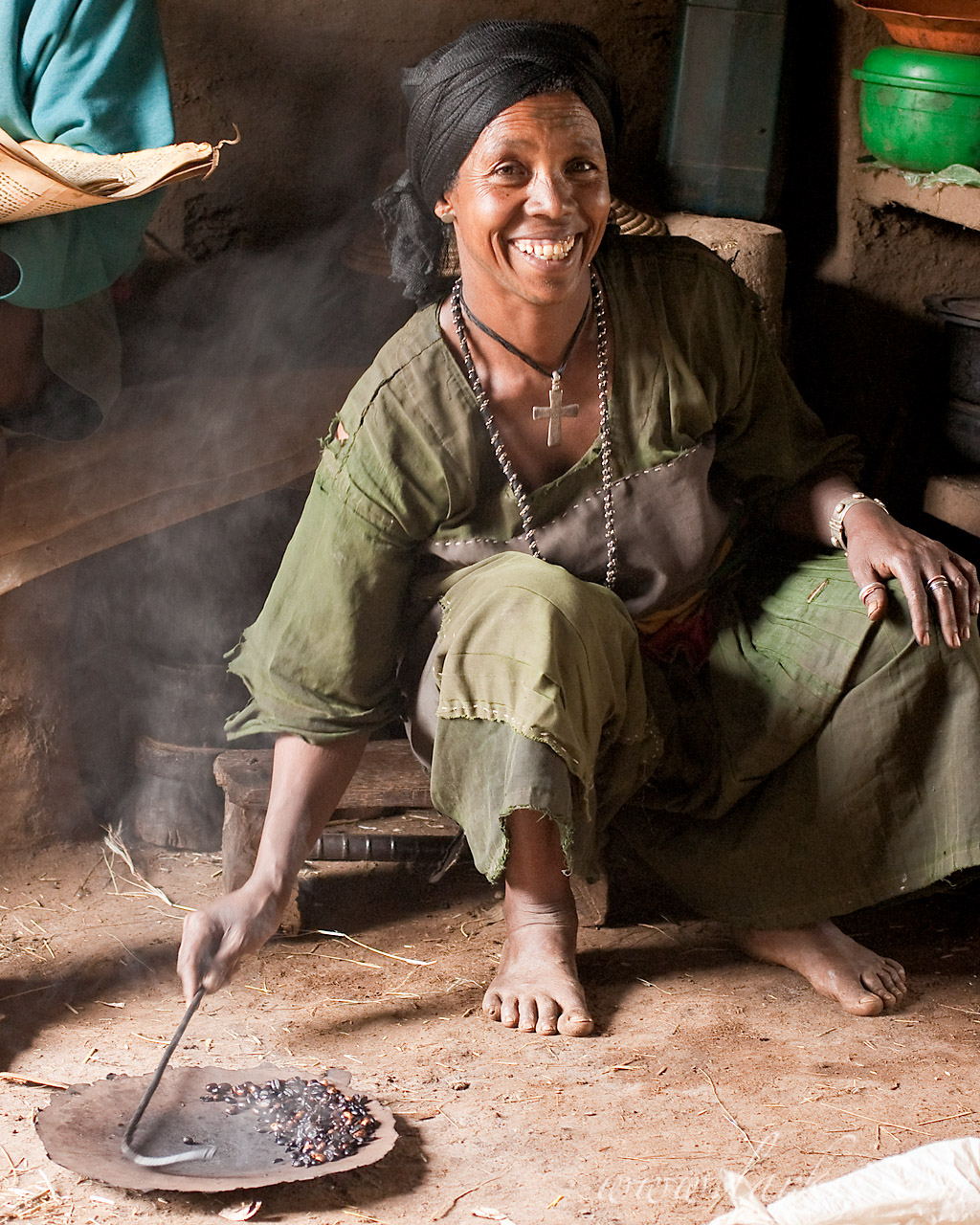
The tradional Ethiopian coffee ceremony, always performed by women, starts with the roasting of green beans in a pan, somewhat like a wok. When they darken, they are brought around to the guests, the share the fragrant smoke.
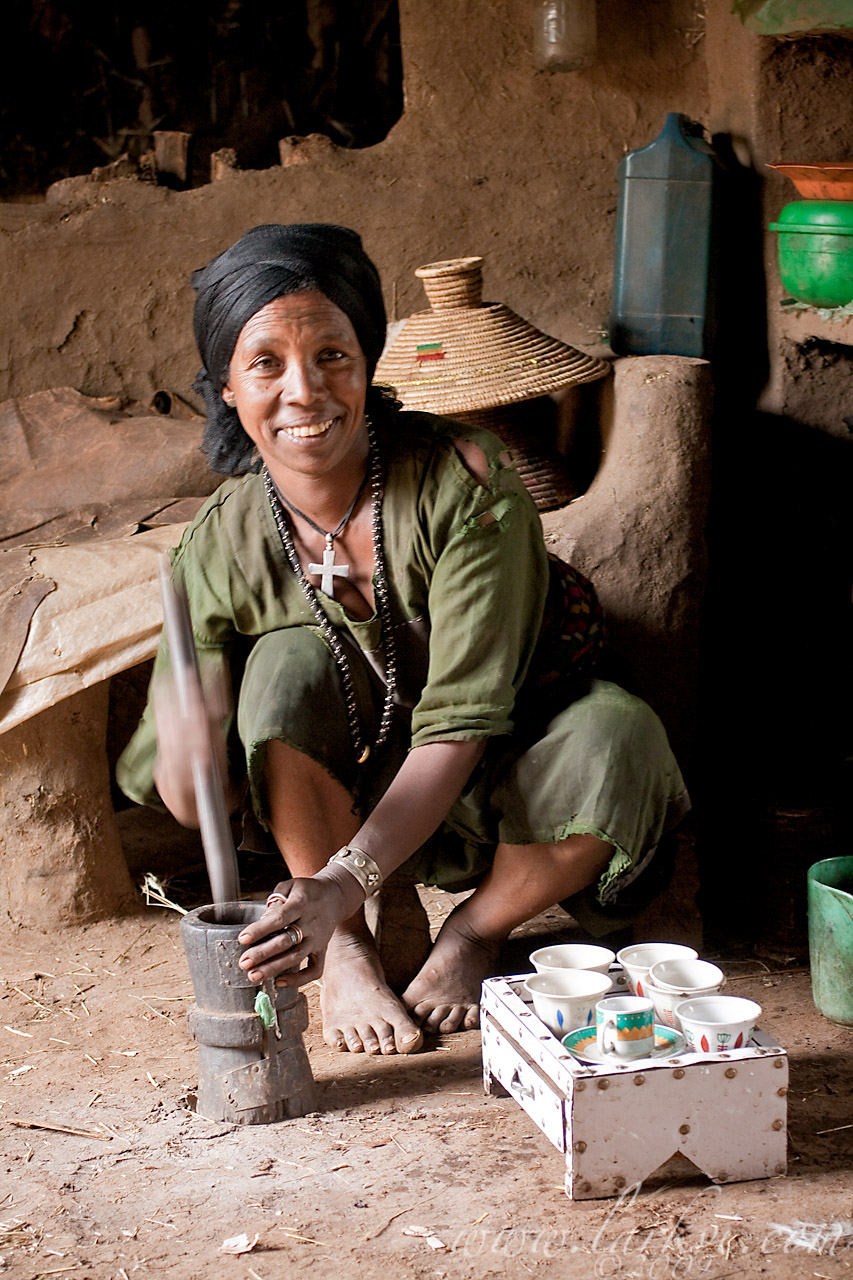
The roasted beans are then pounded by hand in a pestle, often using rebar or a piece of an axle, which people have found to be convenient and effective replacements to traditional materials.
The ground coffee is poured into a tall-necked pot and boiled for ten minutes. The resulting thick, dark coffee is traditionally sweetened with three small spoonfuls of sugar, and guests are expected to drink three cups, the third being considered lucky (you can usually get away with fewer cups, if time is short).
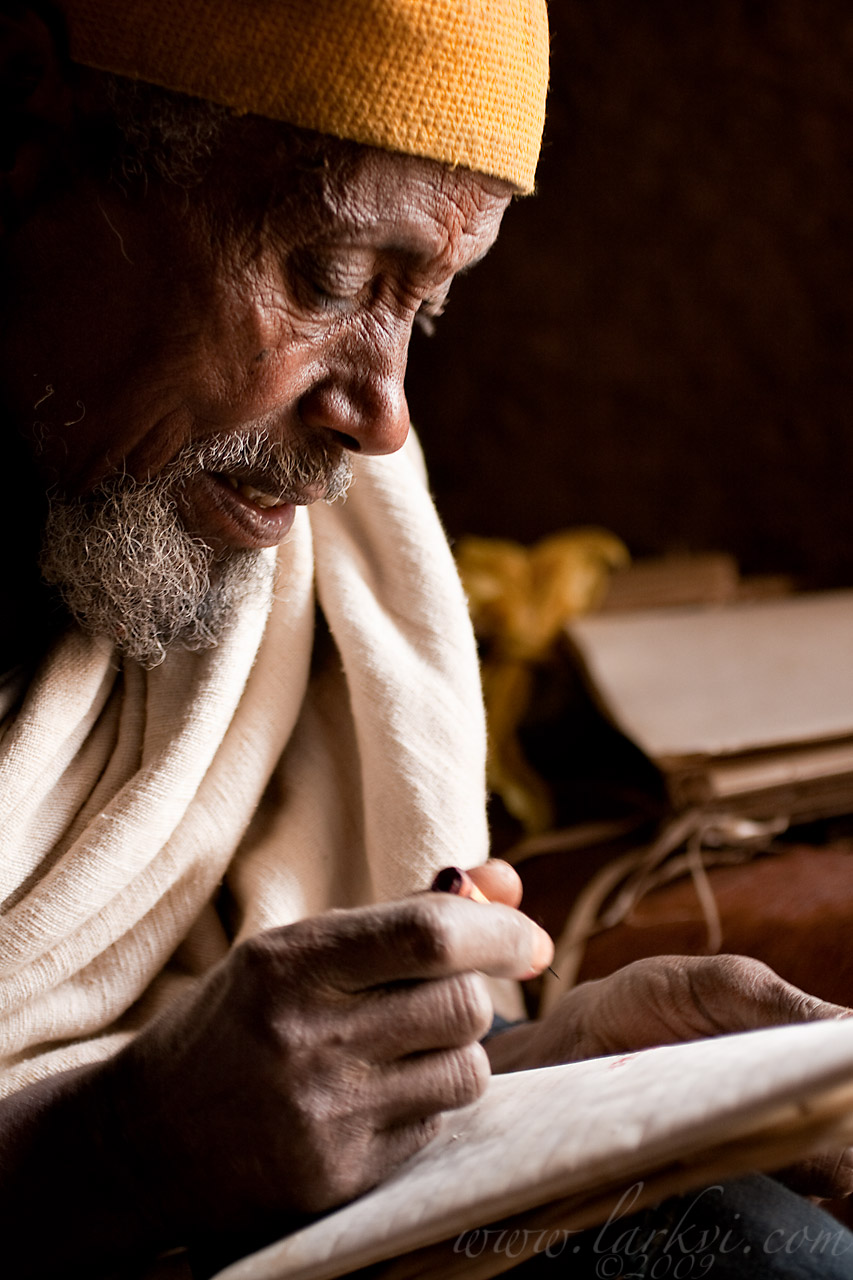
Lika Kahunat (Archpriest) Ajugu, a scribe in the village of Gälawdios, in the Amhara region of Ethiopia. He works at his scribing every non-holiday, and had just finished a large copy of the 4 Gospels when we arrived, which he was going to send to Bahir Dar in search of a buyer.
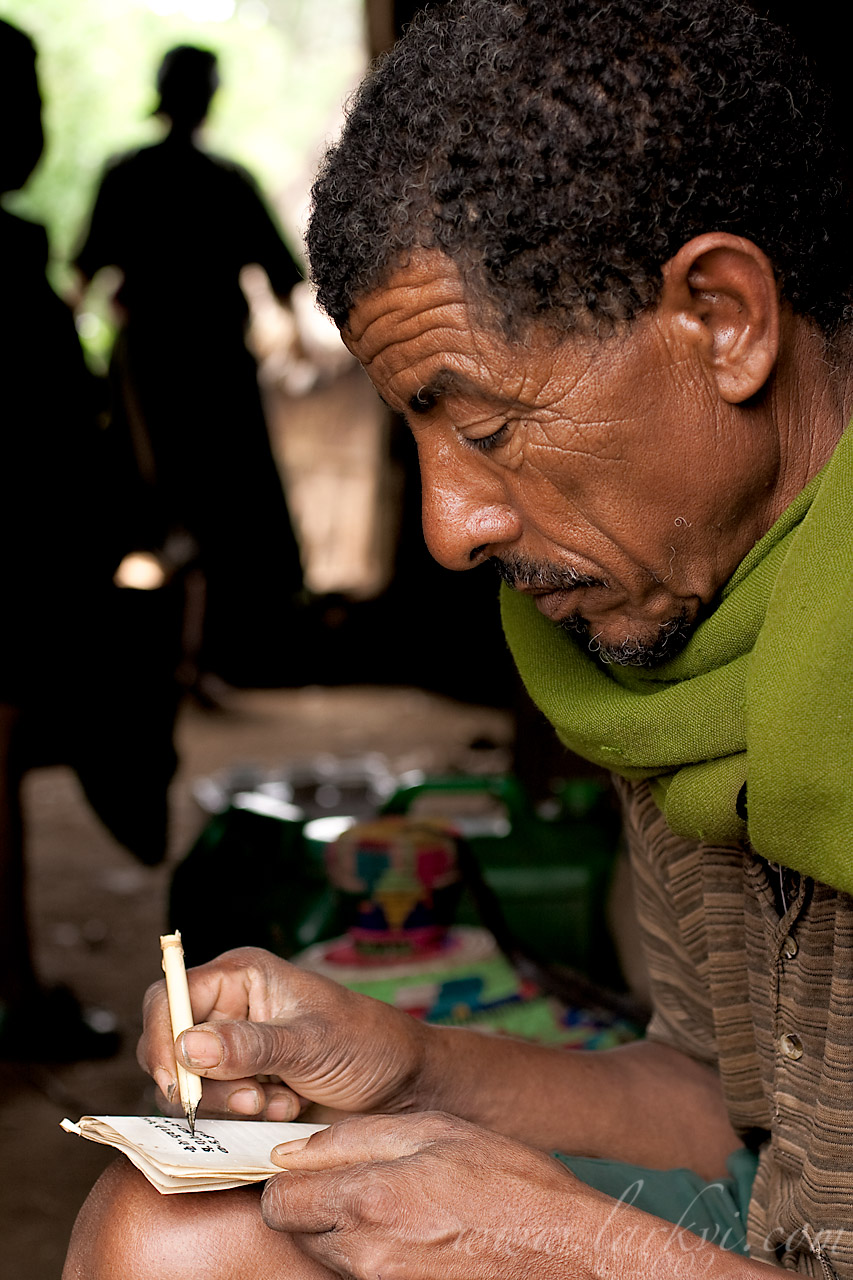
Kes (Priest) Mogas, one of the many scribes active in the village of Gälawdios, adds his name to a sample of his writing. He is training his children in scribe-craft, and while I was there, one was scraping the hair off of parchment on freames behind the house.
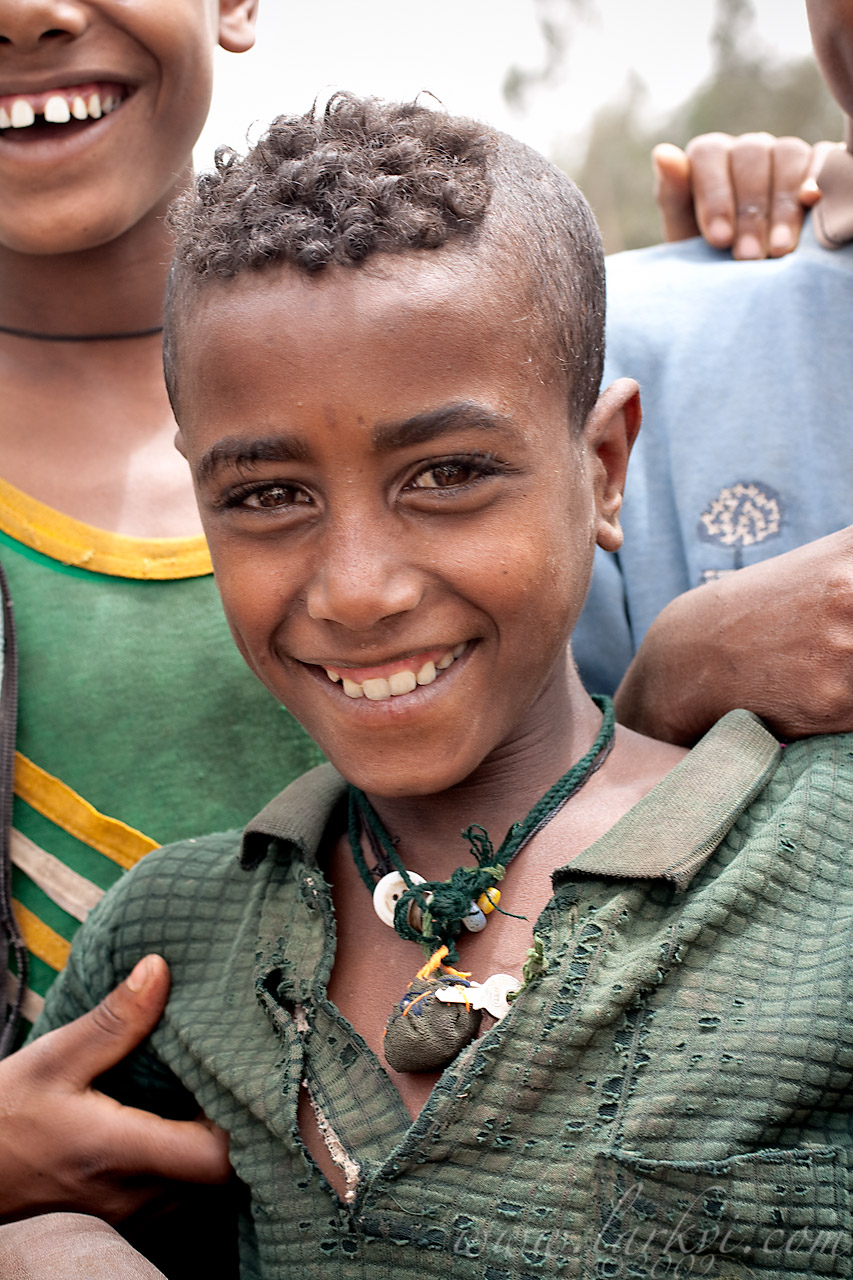
A local boy, wearing an herbal charm around his neck, most probably to ward off the evil eye. A large portion of the däbtära’s work is herb-craft, supplemented by the reading of prayers and invocations and the making of kitab and other written amulets.
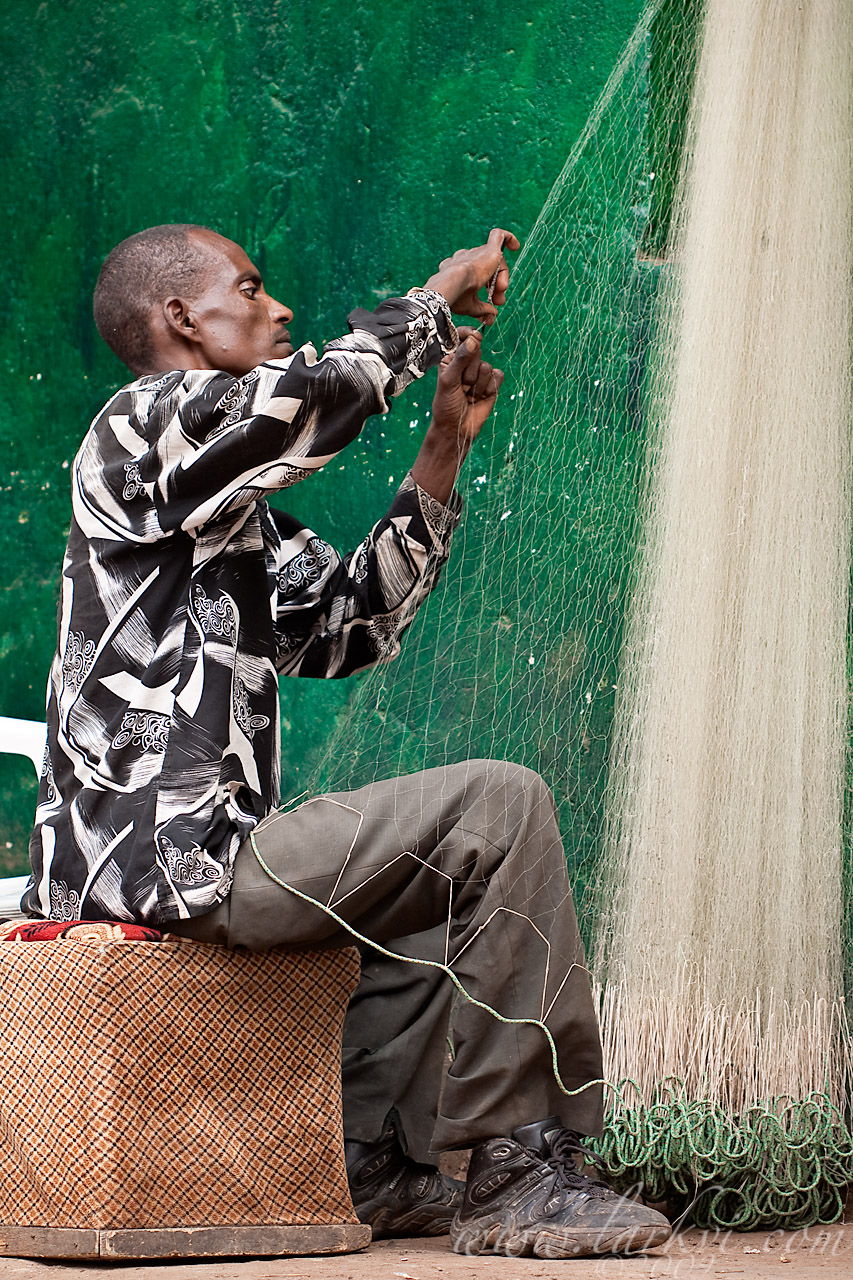
A man repairs his nets on Sunday after church, readying himself for another week of fishing. I believe most of the fisshing in Lake Tana is for perch, and the ‘asa dulet’ (fish goulash) here is the best I have had in the country.
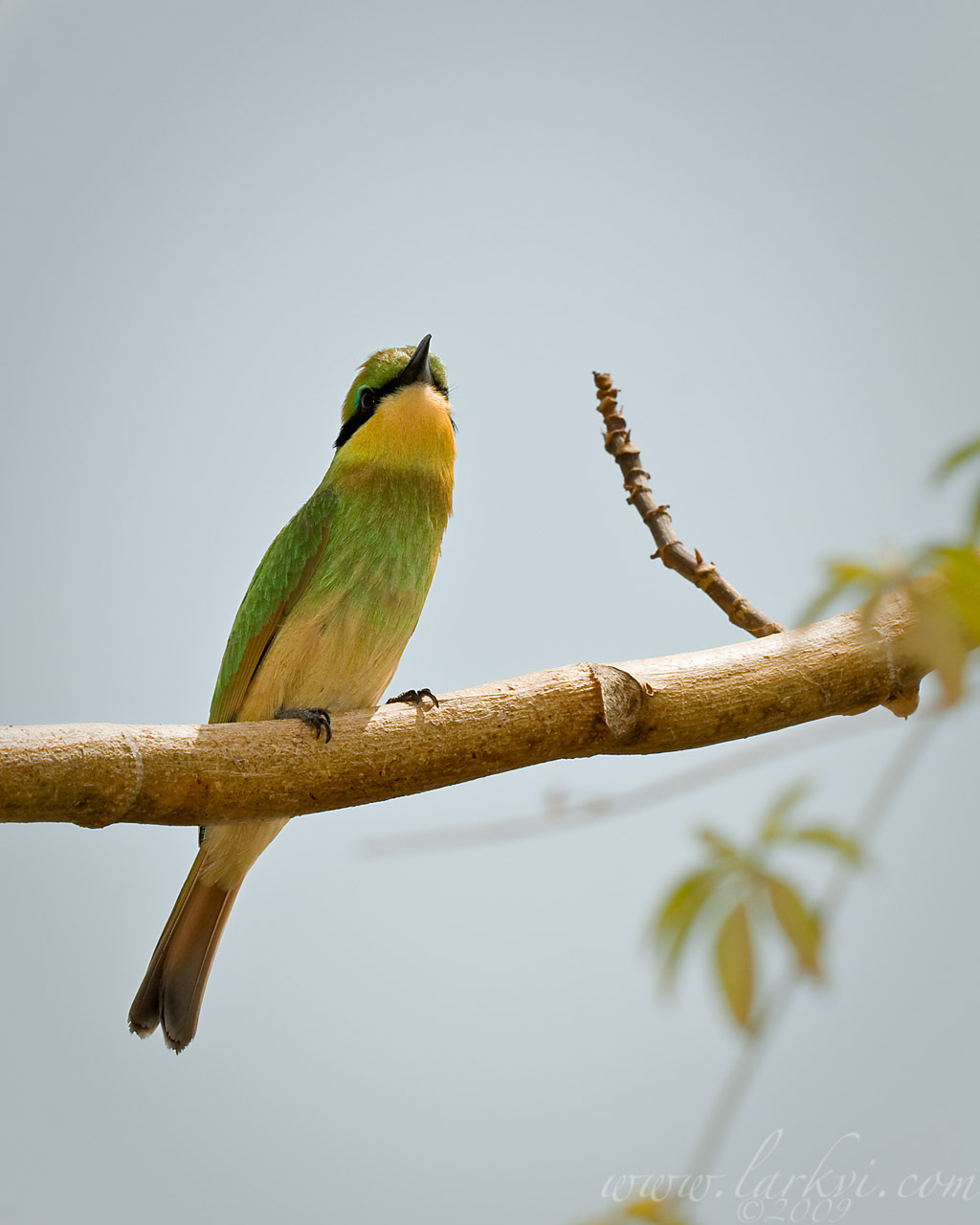
A flycatcher sits on a branch by lake Tana, patiently waiting for me to take its picture.
This was identified for me as a Little Green Bee-Eater (Merops orientalis), but I have had a chance to look at Birds of the Horn of Africa, and the distribution for the Little Green Bee Eater is wrong, and the Green one has green, not yellow, at the throat. I think it is a Little Bee-Eater, Merops pusillus.
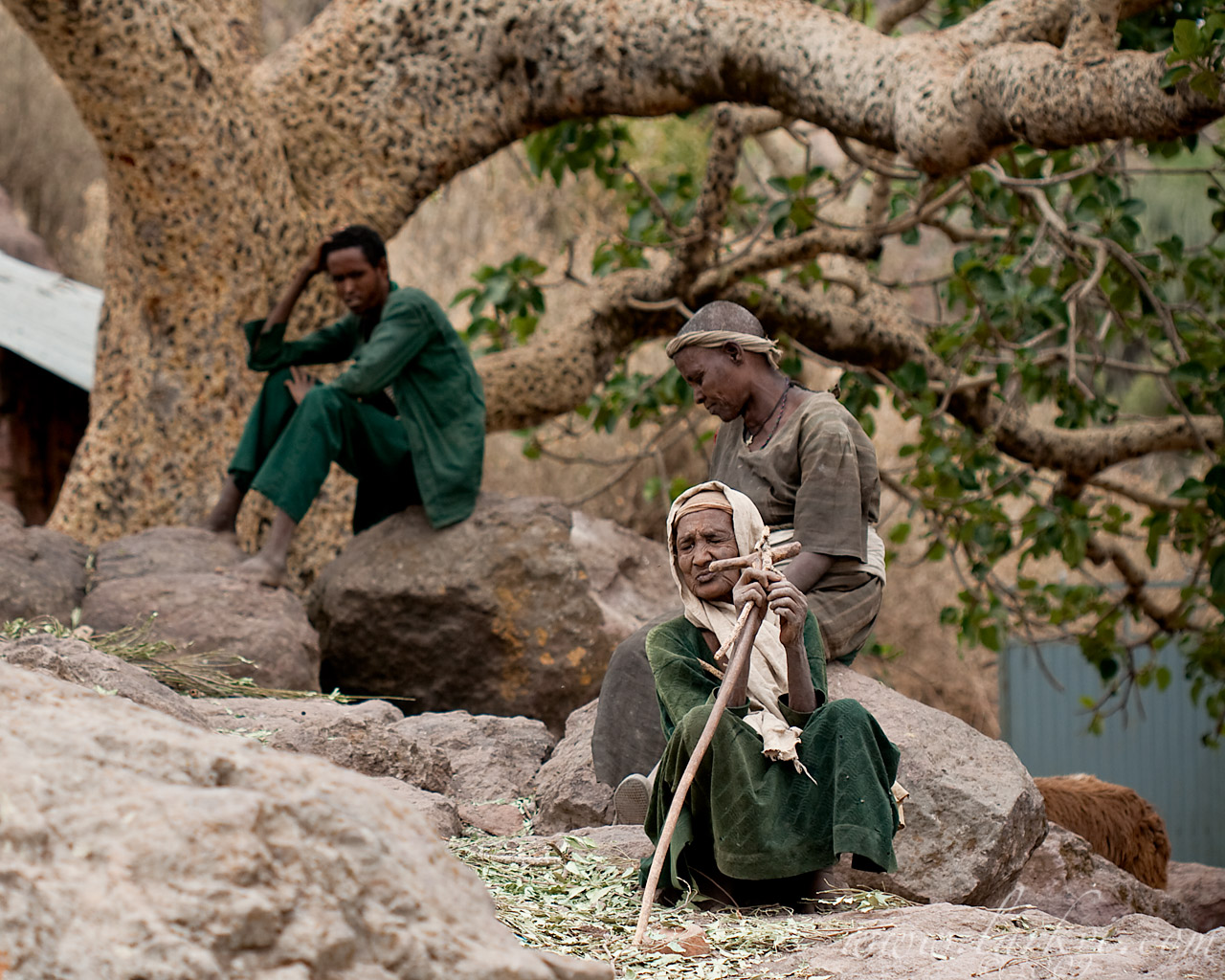
Pilgrims sit under a tree in front of Bilbala Gyorgis Church, near Lalibela, Ethiopia. Most have spots of skin smeared with the holy mud cure that makes the church an attractive pilgrimage site.
Large trees, especially sycamores, as here, are associated with churches and gathering-places in Ethiopia. In the Southern part, they are holy sites for animist cults, and it is thought that they may have had religious significance in pre-Christian times.
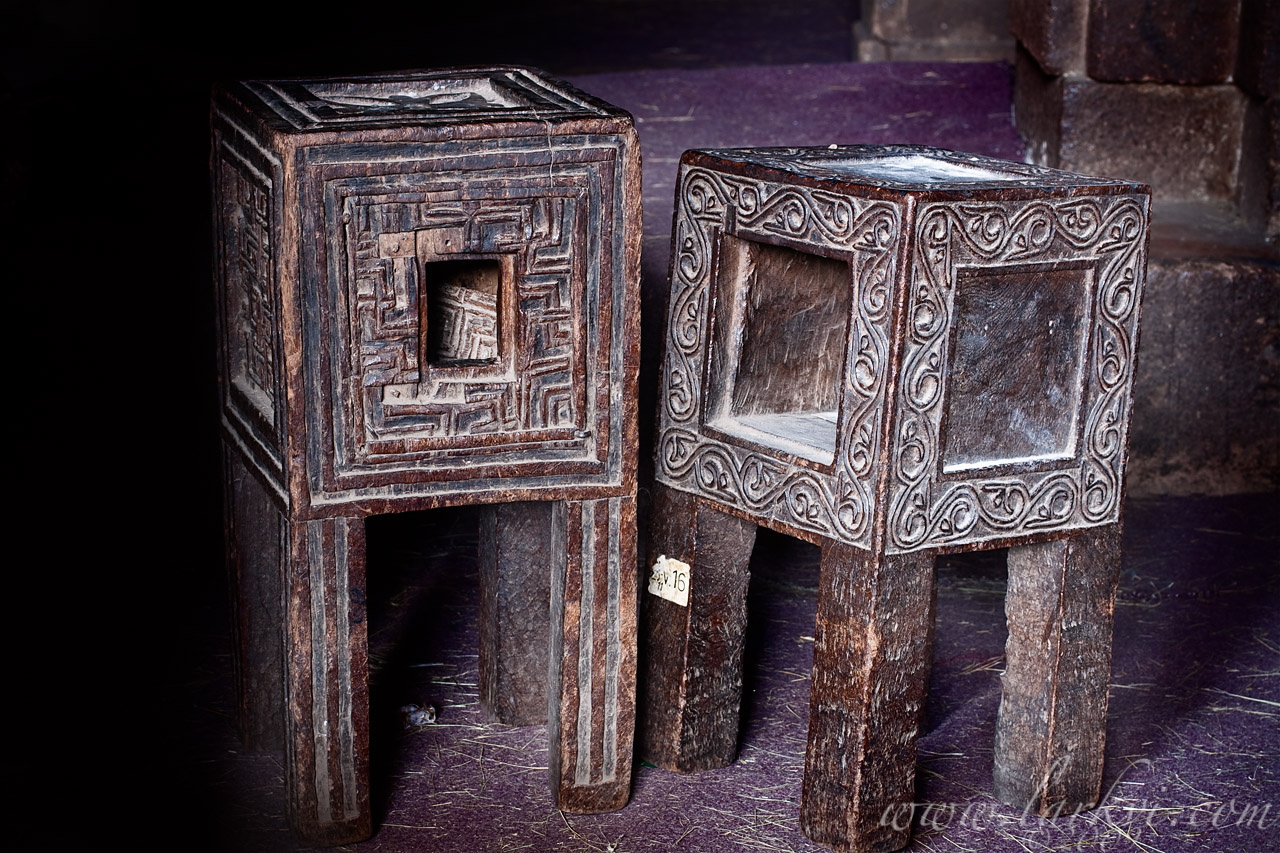
These portable altars, in the collection of Yemrehana Kristos Church, are an interesting relic of the unique liturgical heritage of the Ethiopian church. The style of the altar derives directly from carved stone incense burners used as part of Sabean (South Arabian) religious customs, dominant in Axum at some point before the adoption of Christianity in 330. Over time, the incense burners evolved into closed wooden altars, and were later replicated in stone, with permanent, stationary, carved monolithic altars at some churches (most impressively in the Selassie Chapel in Lalibela) carved to resemble portable altars. The use of portable altars, their replication in stone, and changes in the pattern and number of altars may be used to re-construct elements of the liturgical history of Ethiopia (for more on this, see the work of my advisor, Michael Gervers).
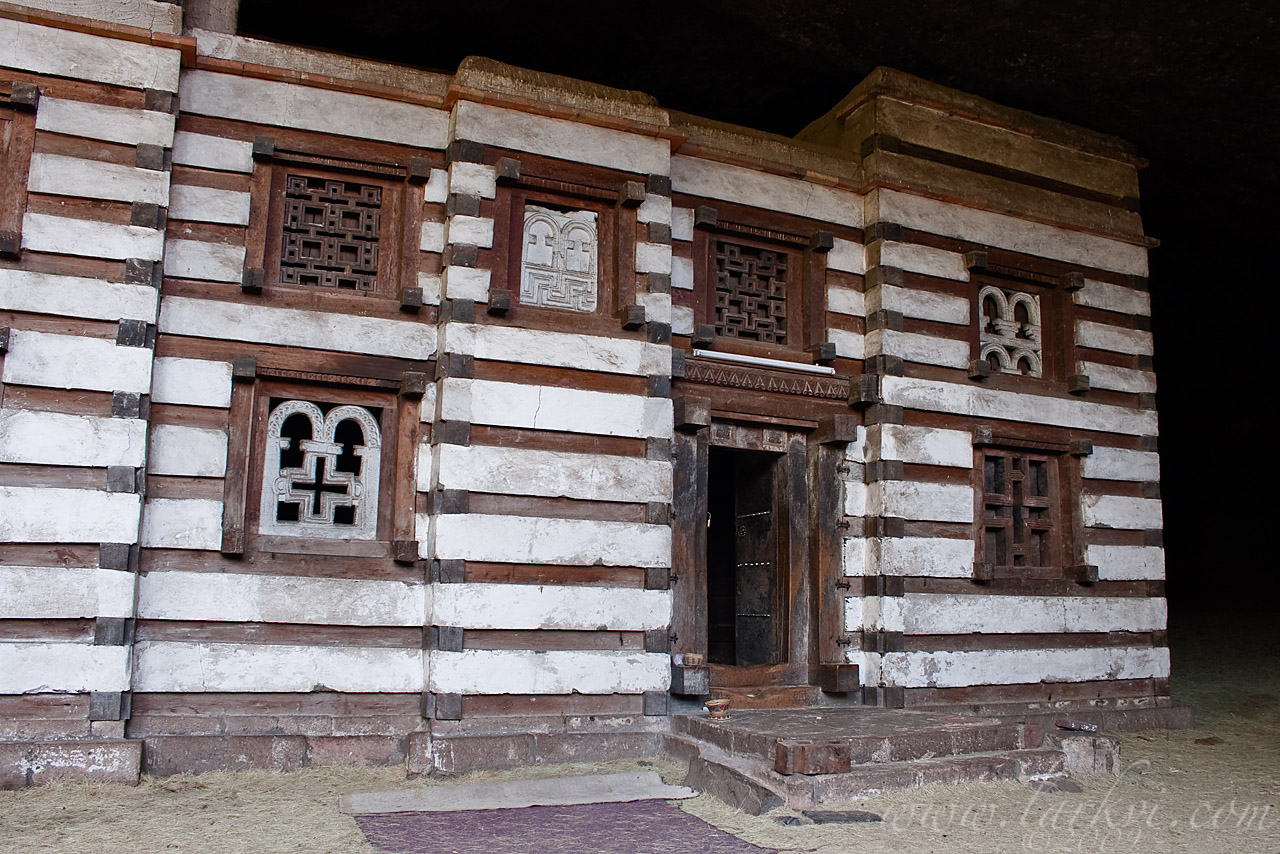
Yemrehana Kristos, in the village of Imrehana, 35km outside of Lalibela, is without doubt one of the most impressive churches in Ethiopia, and should be on the itinerary of anyone who is visiting the country. An hour’s drive from Lalibela over a 4WD road, it is slightly remote, and does not get the attention it deserves.
The church is one of the most important and impressive examples of the Axumite style of architecture. This style is characterized by the alternating layers and protruding beam-ends (‘monkey-heads’), as can be seen above. Another common feature, which can’t be seen here, is the presence of a number of blind (false) windows inside. Yemrehana Kristos is an interesting variant on the cave church, being a full, roofed church built inside of a large cave. Outsside of the church is the traditional former residence of the founding king and a bone-pile with the corpses and remains of an estimated 10,000 pilgrims (and possibly massacre victims as well).
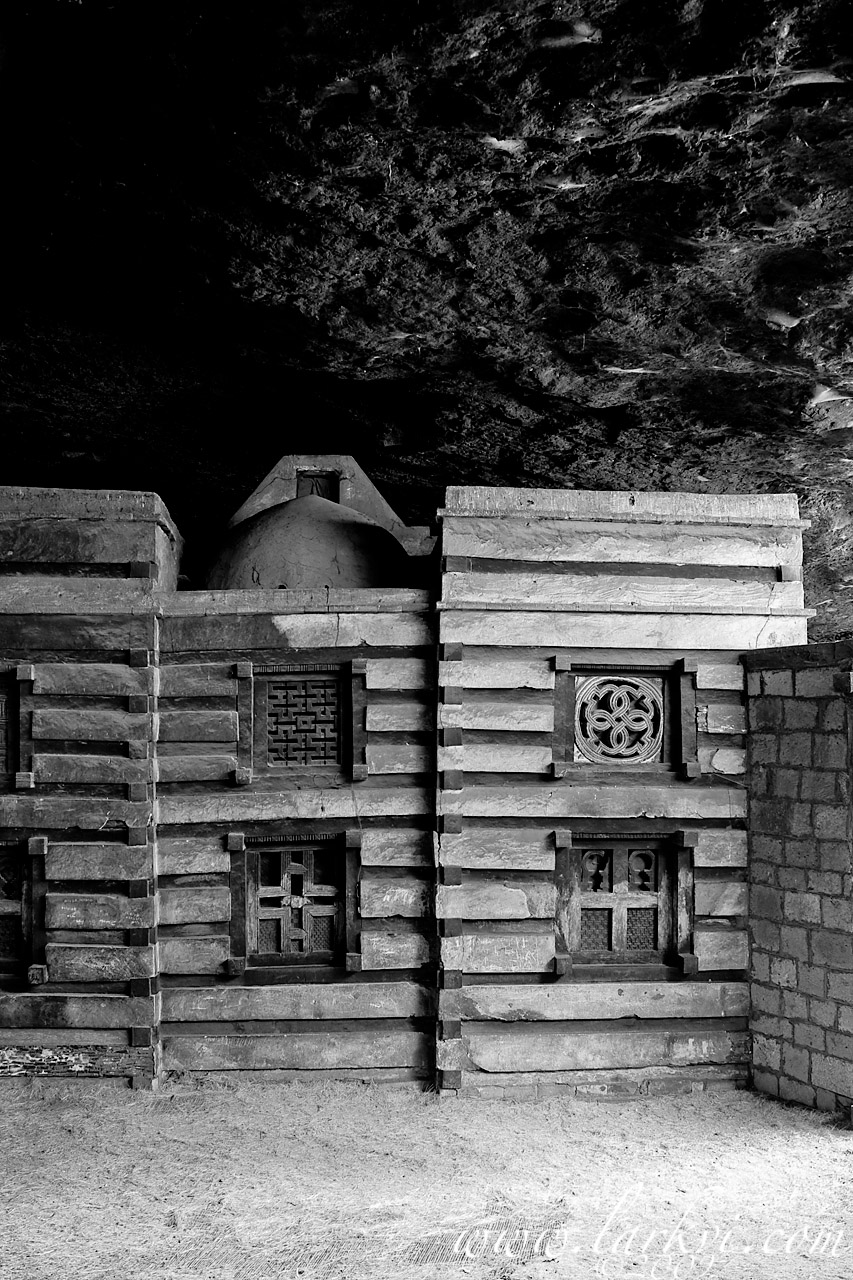
The somewhat unusual nature of this church as a full, roofed church built in a large cave is shown here. The wall on the right is recent, but this view, towards the sanctuary gives a good sense of the Axumite style of building.
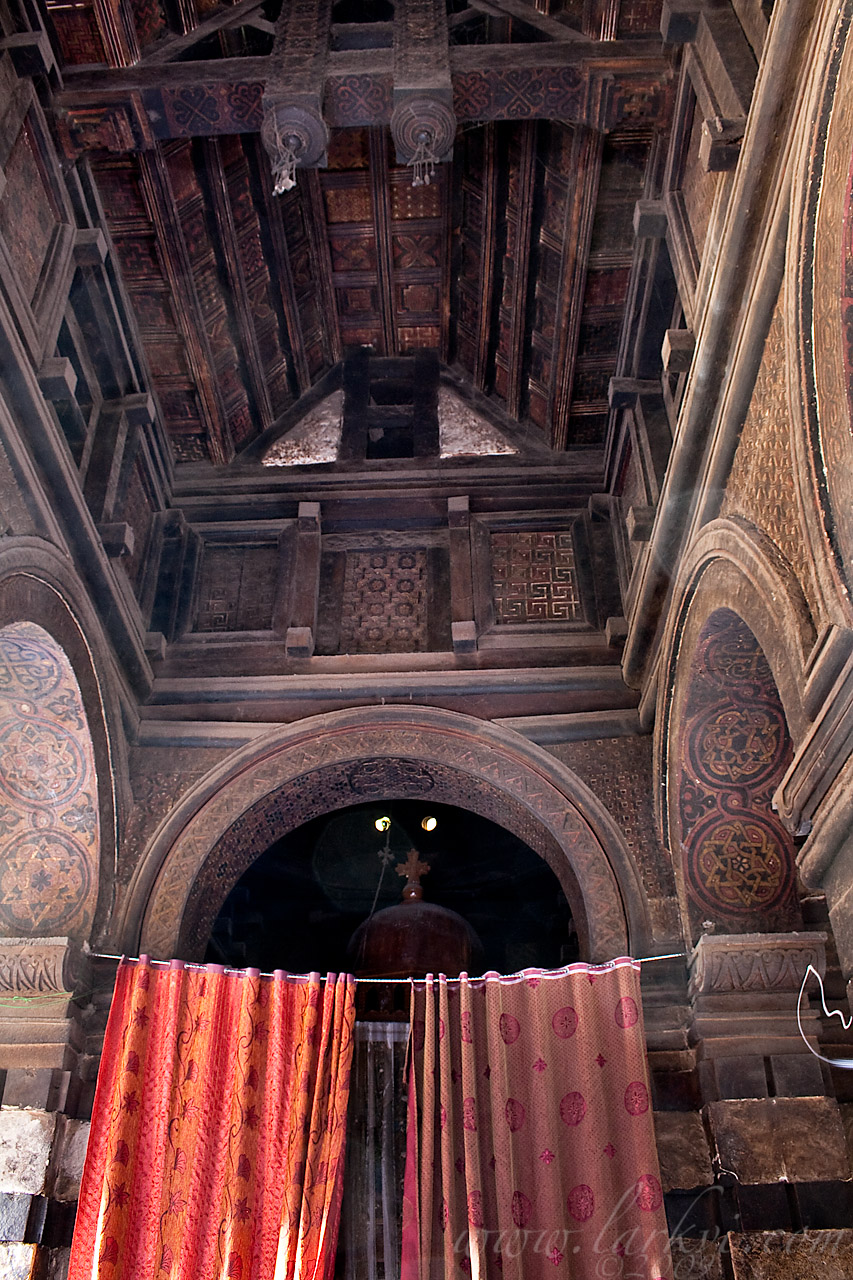
This interior shot, a mixture of natural light and light painting using flashlight over a two-minute exposure, begins to show how extravagantly decorated the interior of the church is, and also shows a characteristic Axumite series of blind windows on the upper level. The geometric decoration scheme is unusual in EOTC architecture, adding to what is exceptional about this church. The paintings are frescoes, and some are starting to degrade, making conservation a pressing priority.
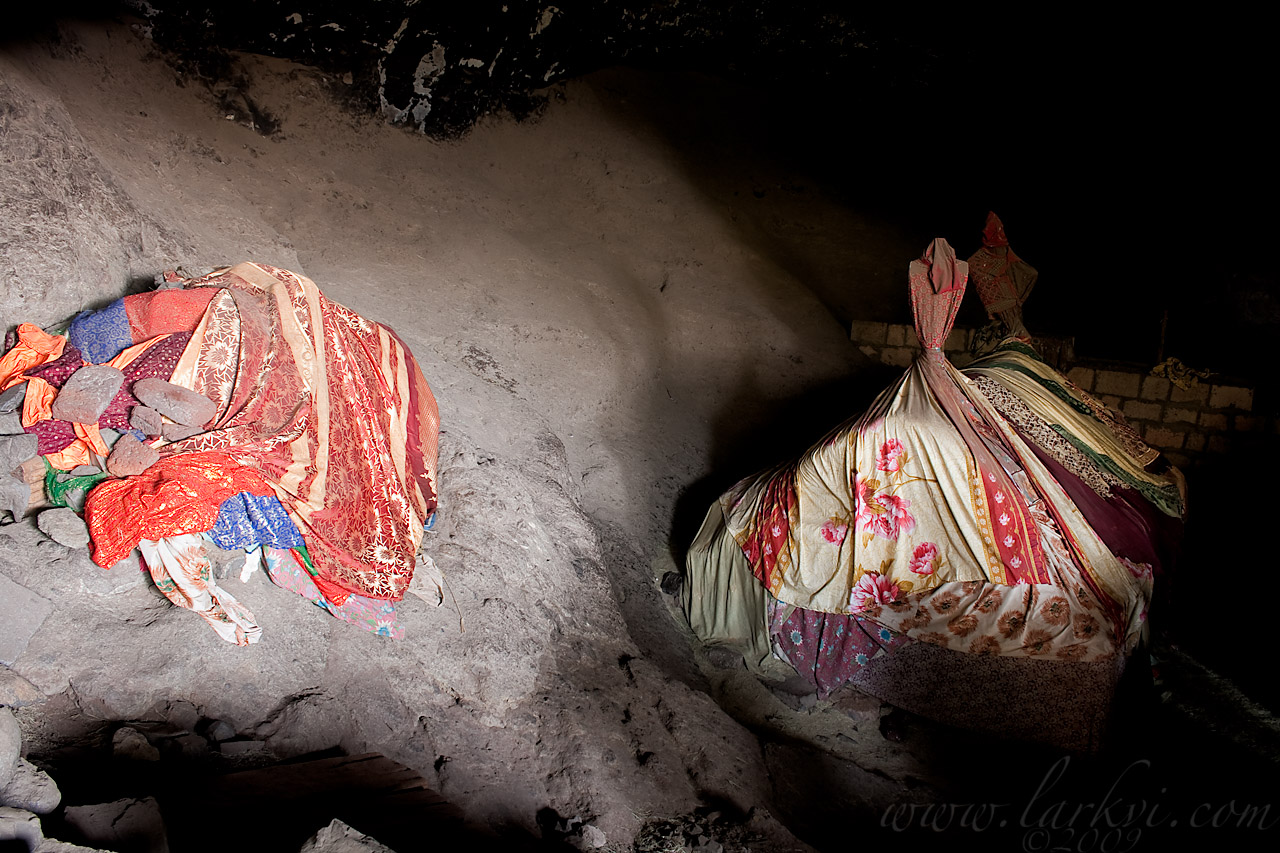
These tombs, I believe of King Imrehana and his brother (but I would have to look that up) are in the cave, next to the church. Ethiopians make a habit of covering anything of religious significance with large amounts of cloth, a custom well-exemplified here.