Stela 2, the ‘Rome Stela,’ North Stelae Field, Axum, Tigray, Ethiopia, April 2009

Stela 2, the 'Rome Stela,' North Stelae Field, Axum, Tigray, Ethiopia, April 2009

Stela 2 in front of the new Maryam Tsion Church.
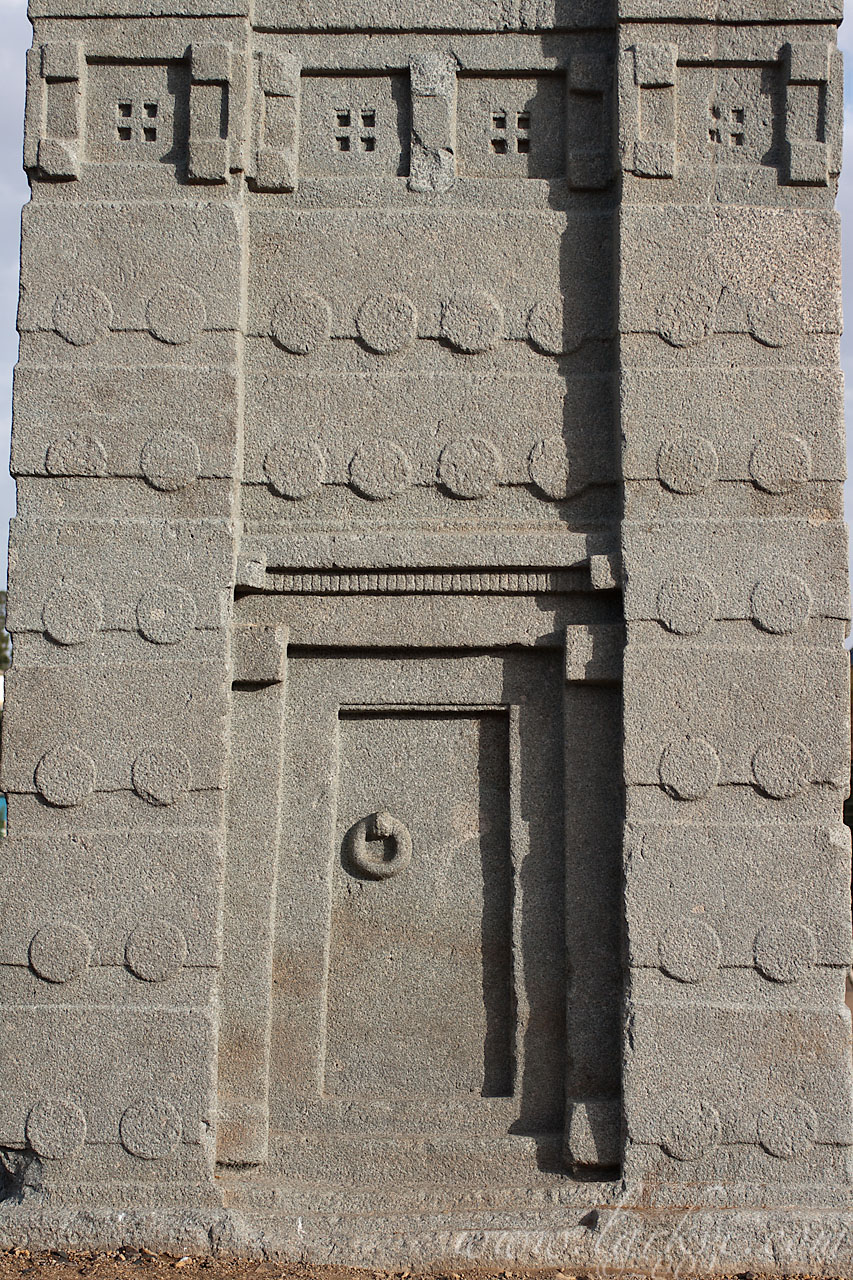
False Door, Stela 2, North Stelae Field, Axum, Tigray, Ethiopia, April 2009

The false-door on the Rome Stela, granting access to the palace which the stela represents.
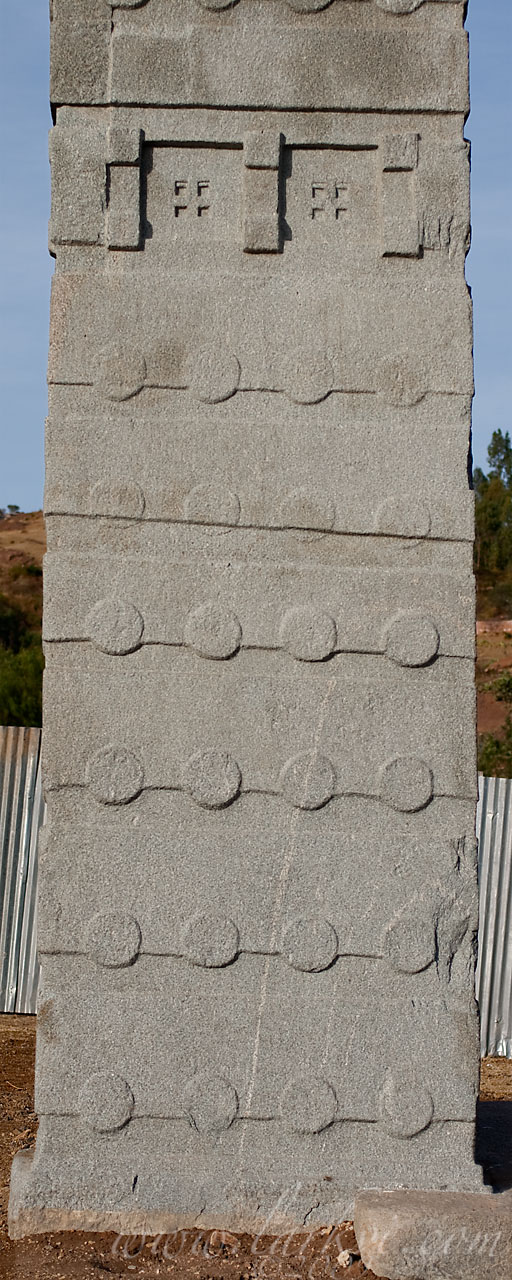
Side View, Stela 2, North Stelae Field, Axum, Tigray, Ethiopia, April 2009

A side-view of the Rome Stela, showing the carving representing the ends of wooden poles and alternating layers of stone and wood, characteristic of Axumite building.

—–

Stela 2, known as the ‘Rome Stela,’ stands in the North Stela Field in Axum and is, at 24.6m tall (2.9m of which is underground), the largest stela ever to be successfully erected (the ‘Great Stela,’ though considerably larger, seems to have fallen during the process of erection). It was erected just before the apogee of stela-building, which greatly declined with the fall of the Great Stela, concurrent with the Christianization of the Axumite Empire. All the stelae appear to mark tombs or graves of important individuals from Axumite times. The tombs associated with Stela 2, like many others, seem to have been extensively pillaged in the 17th century; the disturbance from such excavations as well as the generally under-studied nature of the field, complicates dating.

At some point in the medieval period, the stela was deliberately sabotaged by the digging of a destabilizing trench; its subsequent collapse shattered the stela into five major and numerous minor pieces. The myth of Queen Gudit attributes destruction of stelae to Gudit’s general devastationof Axum in the 12th century, but the Gudit legend is problematic, conceived as political attack and possibly conflating several historic figures (if it indeed represents any) in its more recent version. It was in this (fallen) state that the stela was recorded by the first Europeans travel-writers in the 17th century, and in this state that it existed at the time of the Fascist occupation when, at Mussolini’s personal order, (most of) the fragments were removed to Rome, reassembled and erected in the Piazza di Porta Capena.

It continued to stand in Rome until 2005; in 1997 Italy and Ethiopia agreed on the return of the monument to Axum, which was not effected until the later date. Further complicating matters, unexplored tombs under the ground around the stela meant that heavy cranes could not be used, and it lay in pieces next to the parking lot for three year. When it was re-assembled in 2008, it stood in its original place for the first time in centuries.

For more information on Stela 2 and Axumite stelae more generally, see:

Phillipson, David. Archaeology at Aksum, Ethiopia, 1993-7, vol. 1. London: The British Institute in East Africa 2000. pp. 139-156.

Munro-Hay, Stuart. Aksum: An African Civilisation of Late Antiquity. Edinbugh: Edinburgh University Press 1991. pp. 125-143.
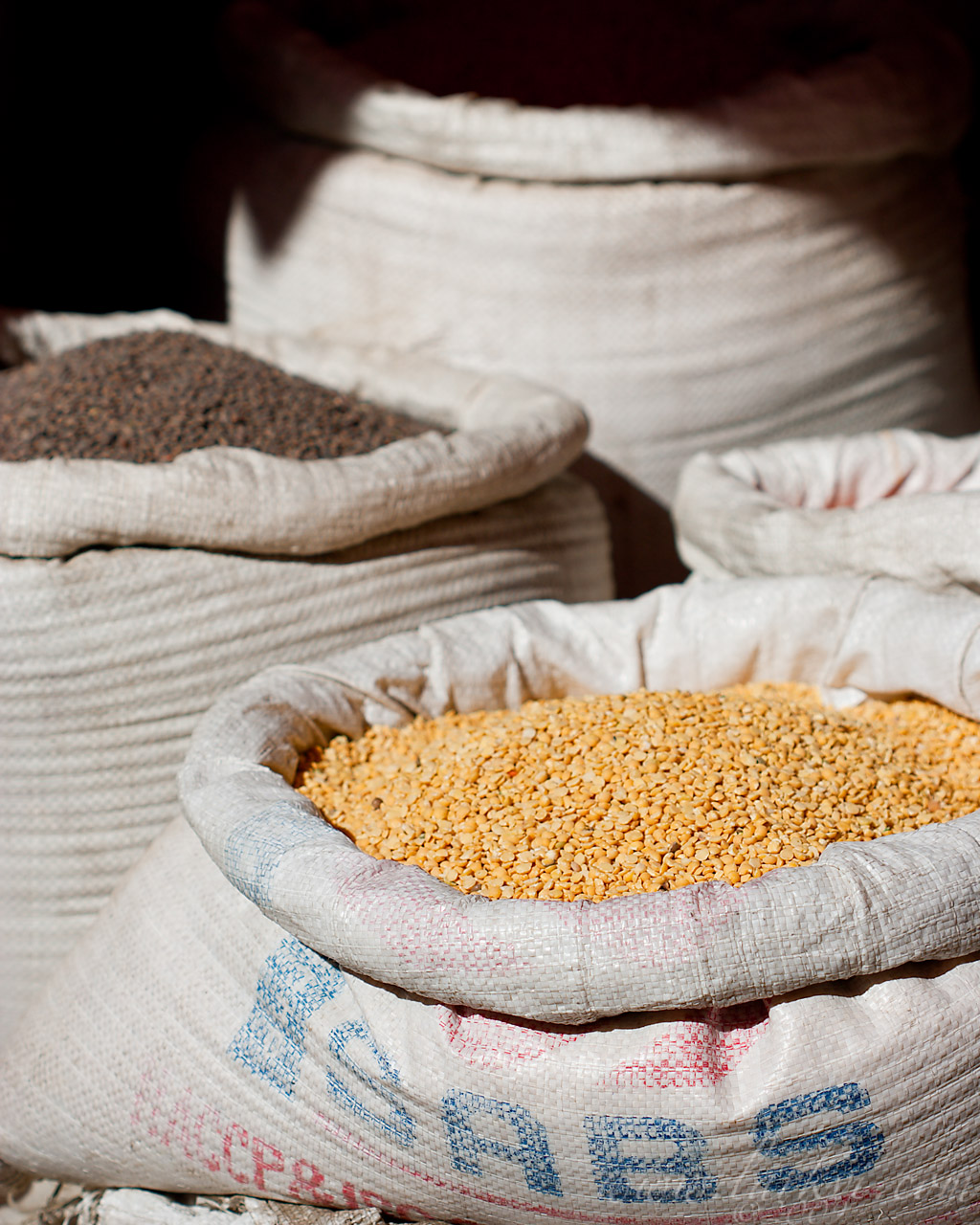
Legumes, Old Market, Mek’ele, Tigray, Ethiopia, April 2009

Legumes, Old Market, Mek'ele, Tigray, Ethiopia, April 2009

Bags from various places hold legumes on display in the old market area of Mek’ele, capital of Tigray. Legumes are greatly consumed during the fasting season, and an important part of the diet year-round, as people fast on vegetables at least twice a week in the Christian parts of the country.

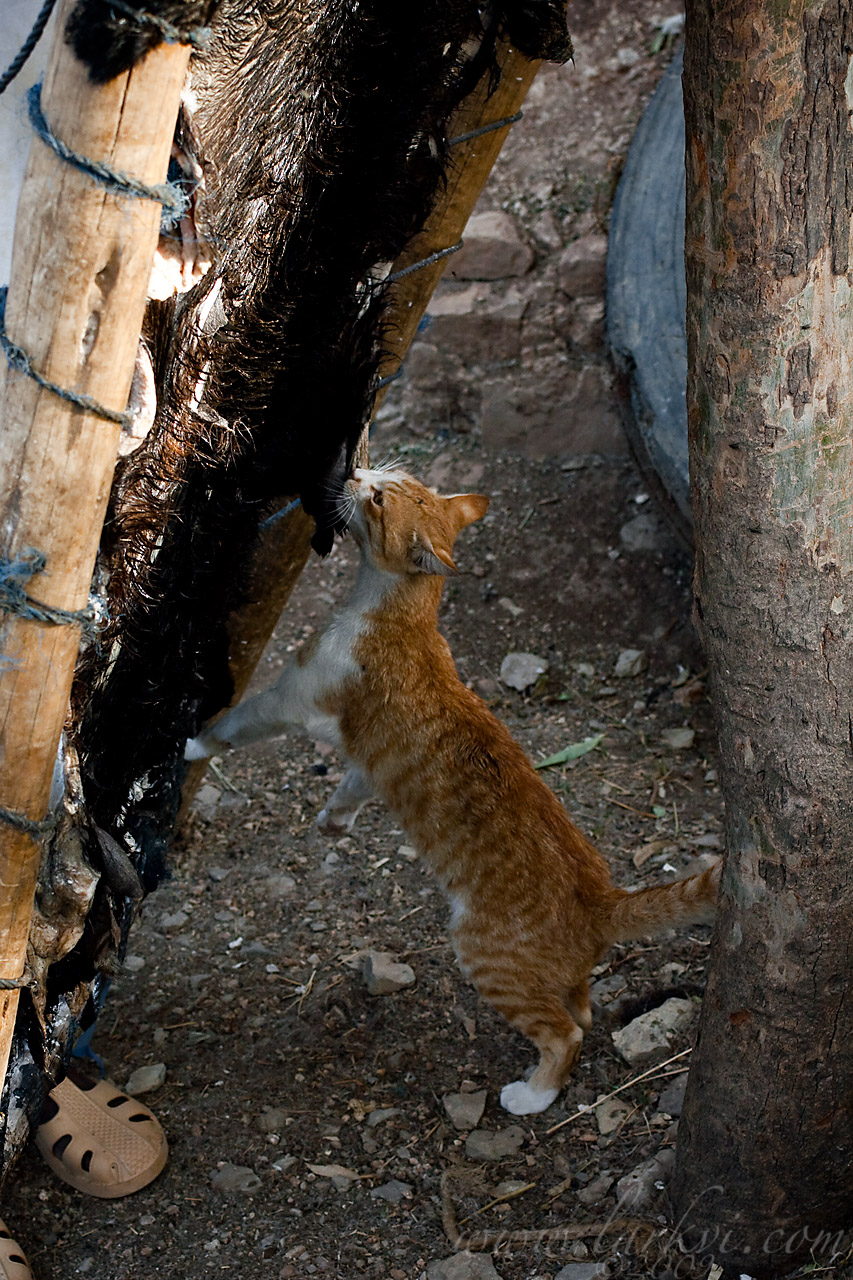
Cats Hate Fasting Season, Mek’ele, Tigray, Ethiopia, April 2009

Cats Hate Fasting Season, Mek'ele, Tigray, Ethiopia, April 2009

Marigeta Birhanu’s cat was loudly letting himself be heard throughout our interview, and practically attacking the skin for parchment while stretched on the frame, before the meat was removed. It only occurred to me part-way through that the cat was subject to fasting season, just as the people are, because he eats leftovers from the table. Injeera may be sustaining for a cat, but rancid goat-meat was more to his preference.

Ethiopian Manuscript Heritage Problems and Preservation Strategies

I recently lectured to both the first- and second-year classes of Heritage Preservation and Paleoenvironment students at Mekele University on the problems facing manuscript (and more general) conservation and preservation in Ethiopia. While not a full workshop (which I hope to conduct in November, if I can find funding to get back to Ethiopia), it was nevertheless an introduction to my work, the field, and the preservation/conservation challenges facing those tasked with preserving the knowledge and physical objects associated with the Ethiopian manuscript tradition.

While I have not the time to reprise the whole presentation, I will link here to the powerpoint portion, which outlines the talk, even as it only represents a small amount of what I said (I loathe talks where the presenter reads out his own slides, and will not do it myself). If this is of interest, I can go on at greater length, and if anyone finds this kind of material absolutely essential to their program, I am available to give this talk anywhere you care to pay my travel expenses to. . . 

http://www.larkvi.com/misc/MekeleMssPresPres01.ppt

Friday Link: iTunesU

I have been traveling a lot in recent years, and my iPod and laptop have become my most constant and consistent companions. Accordingly, I turn to them a great deal for entertainment, but rather than playing games or listening always to music, I follow a great number of podcasts, from the purely educational to short-fiction pieces. Here in Ethiopia, I have no chances to take courses, so I have really come to appreciate iTunesU, a joint project of Apple and a variety of universities, comprising lecture series and even full courses. This is a great way to kill time on extended journeys and allows one to be aware of some of the scholarly work being presented at institutions far way.

Though there are several impressive universities participating, including MIT, the Open University, and Texas A&M, I have so far only had a chance to listen to the Humanities offerings of Stanford and Yale.  Stanford, from what I have sampled, is doing a much better job of presenting interesting material, selecting from their excellent lecture series (which I have fond memories of attending while an undergraduate at UC Santa Cruz), whereas Yale Humanities seems, for the most part, to be producing pieces with advertising and alumni relations in mind, which I do not find very interesting. I have even been listening to two whole courses, an intro to the humanities course on the Literature of Crisis and an excellent course on the Historical Jesus. When I again have access to a fast internet connection, I will look deeper into Stanford’s catalogue as well as expanding the number of universities sampled, but I both highly approve and recommend iTunesU for the independent learner and scholar alike.

I’m trying to get the Friends of the Library of the Pontifical Institute for Mediaeval Studies to start recording and podcasting its lecture series–get out there and work on your institution!

There are two things you should remember before taking off on a trip: 1) you need iTunes (the podcasts interface manages the content) 2) read the syllabus and bring the readings.

Bet Ammanuel Maako Panoramic (mockup), Negash, Tigray, Ethiopia, April 2009

Bet Ammanuel Maako Panoramic (mockup), Negash, Tigray, Ethiopia, April 2009

This is my preliminary mockup of a 20-image panoramic of Bet Ammanuel Maako church and its environs, from my recent trip to Negash. I don’t have enough memory or processing power to work on the full version out here in the field, but click through to the flickr page and select “all sizes” to see a much larger image (which still only represents 10% of the full-size image).


It is not unusual to see Ethiopian churches built in highly-inaccessible places; in fact, it is considered quite appropriate. Accordingly, I walked from where I shot this over three ridges and through two valleys, to get to the hill of the church, only to find, upon my arrival, an easy road which diverged from the highway only 100M from where I had begun my laborious journey. At least the walk back was easy. . .

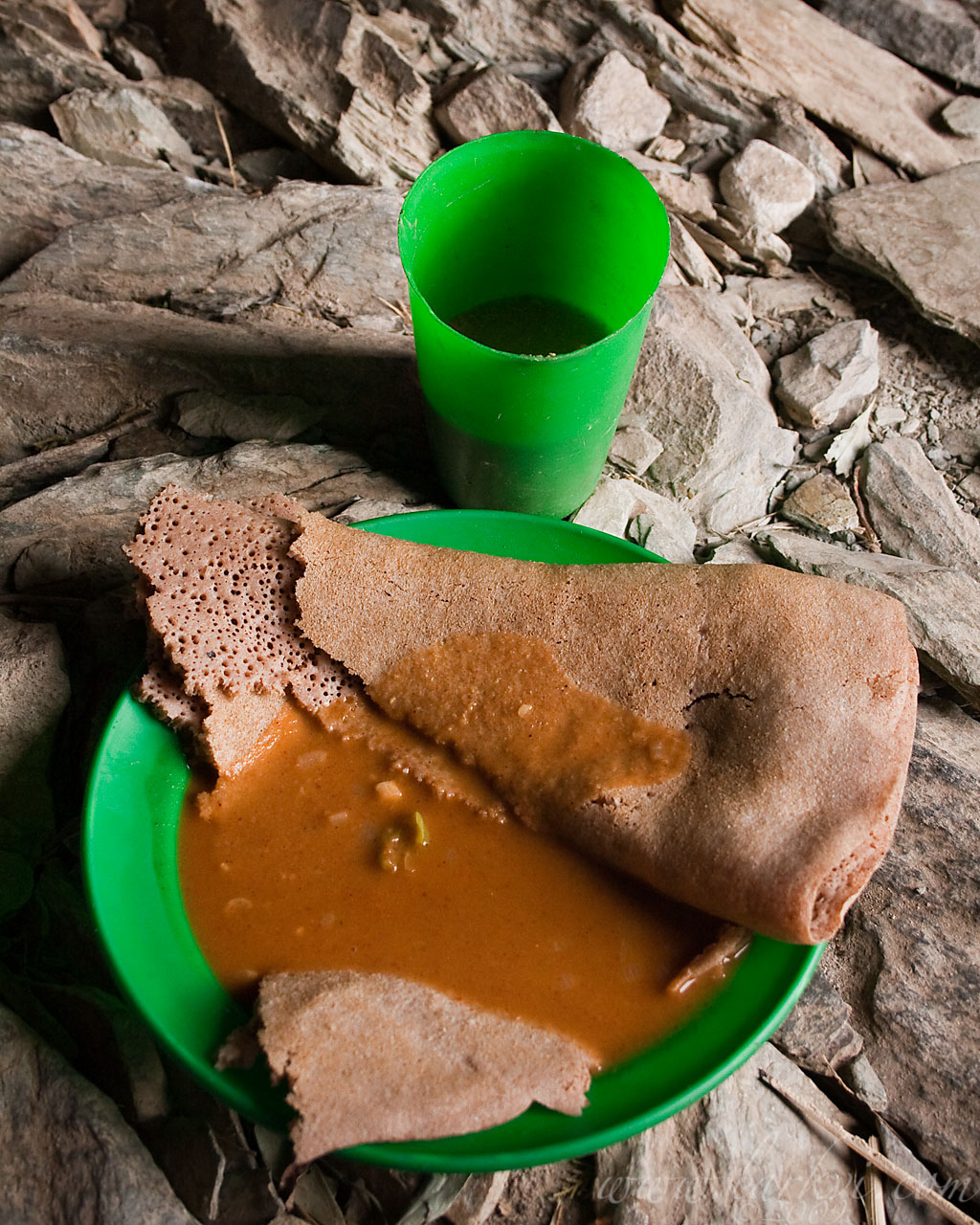
Fasting Meal, Bet Ammanuel Maako, Negash, Tigray, Ethiopia, April 2009

Fasting Meal, Bet Ammanuel Maako, Negash, Tigray, Ethiopia, April 2009

During the fasting season (which is two weeks longer than Lent in Ethiopia), monks and priests, in addition to abstaining from meat and animal products, do not eat until 9 o’clock (which we foreigners would call 3PM). I happened to be at the church just as services ended, and the priests invited me to share their fasting meal. Exhausted from the substantial hike I had taken from Negash, over three ridges and through two valleys,* I readily accepted.

What is pictured is a very typical rural meal, especially during fasting season. It consists of injera, the stable fermented pan-bread of Ethiopia, made of a grain called teff** with a ‘wot’ (stew) of shiro (chickpea paste). The drink is ‘tella,’ a small local beer made of sorghum and barley, fermented with a leaf called ‘gesho,’ which serves in place of hops.*** The injera is dipped in the shiro and eaten, with the stew serving mainly as a flavorant for the injera, which is most of the meal. More injera (and always more tella) is provided, and one is usually prevailed upon to eat much more than one wishes to. A simple and nutritious meal.

That said, I am getting rather tired of injera. 


*There was, of course, an extremely moderate road to the monastery which left the main road very near to my starting place, but which I could not see when I ventured to walk to the church, which is on an imposing height, standing out from the neighboring valleys.

**Almost unique to Ethiopia, teff is a cereal grain very high in both protein and iron. The tiny seeds are easily beaten off the stalk by rain, which contributes somewhat to Ethiopia’s prone-ness to famine (a larger factor is the gross overpopulation of the country, which has grown over 120% since 1960.)

***But is nowhere near as good. One foreigner describes tella as ‘looking like muddy lake-water and tasting much the same.’ That said, this tella was significantly better, though rather full of detritus.

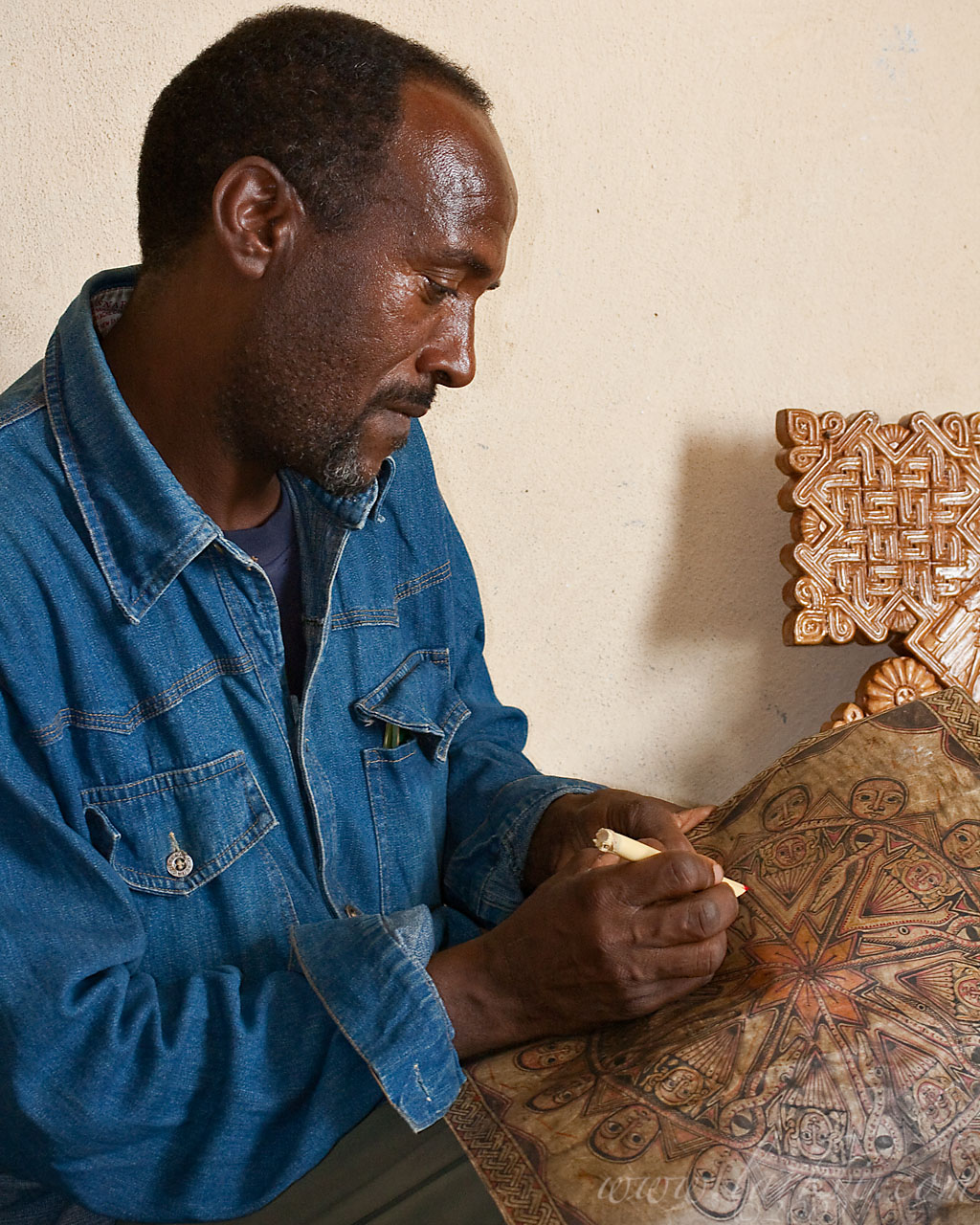
Keshi Mengistu Eyesus, Mek’ele, Tigray, April 2009

Keshi Mengistu Eyesus, Mek'ele, Tigray, March 2009

Keshi Mengistu Eyesu is a woodworker, scribe, and painter working in Mek’ele. He is a consummate artist, and, though he focuses on woodworking (more profitable) now, his scribal works are excellent. Though he produces them with an ink wash, to "antique" them, they need no selling as antiques, as they are excellent modern examples of traditional Ethiopian art (I’m thinking of buying one myself). Here you can see him finishing off a healing scroll with red detailing, while a carved wooden processional cross of his production sits in the background.


Magic scrolls exist in a continuum with church scrolls in Ethiopian Christianity. As in many societies with low literacy rates, writing is associated with the ability to perform magic. In a Christian society like Ethiopia, this is doubly so, as people are familiar with the magical/miraculous abilities granted to the priesthood through the recitation of written documents of the Church. The learned liturgical specialists of the Church, däbtäras, are also suspected as magicians–the word for magician is däbtära–because they have access to knowledge which is secret, both because it requires literacy, and because it is actually secret. Church scrolls, containing prayers invoking the names of angels, Jesus, and the BVM transition into magic scrolls when, in order to grant additional power or a different kind of power, the secret names of devils, demons, and magical entities are used. Apparently, some of these names are written invisibly in a process that I was poorly able to understand, though I am working on it. In addition to scrolls, Ethiopians keep alive a tradition of amulets, both those familiar from Orthodox Judaism, containing biblical passages, and those of a less religious and more magical nature.